

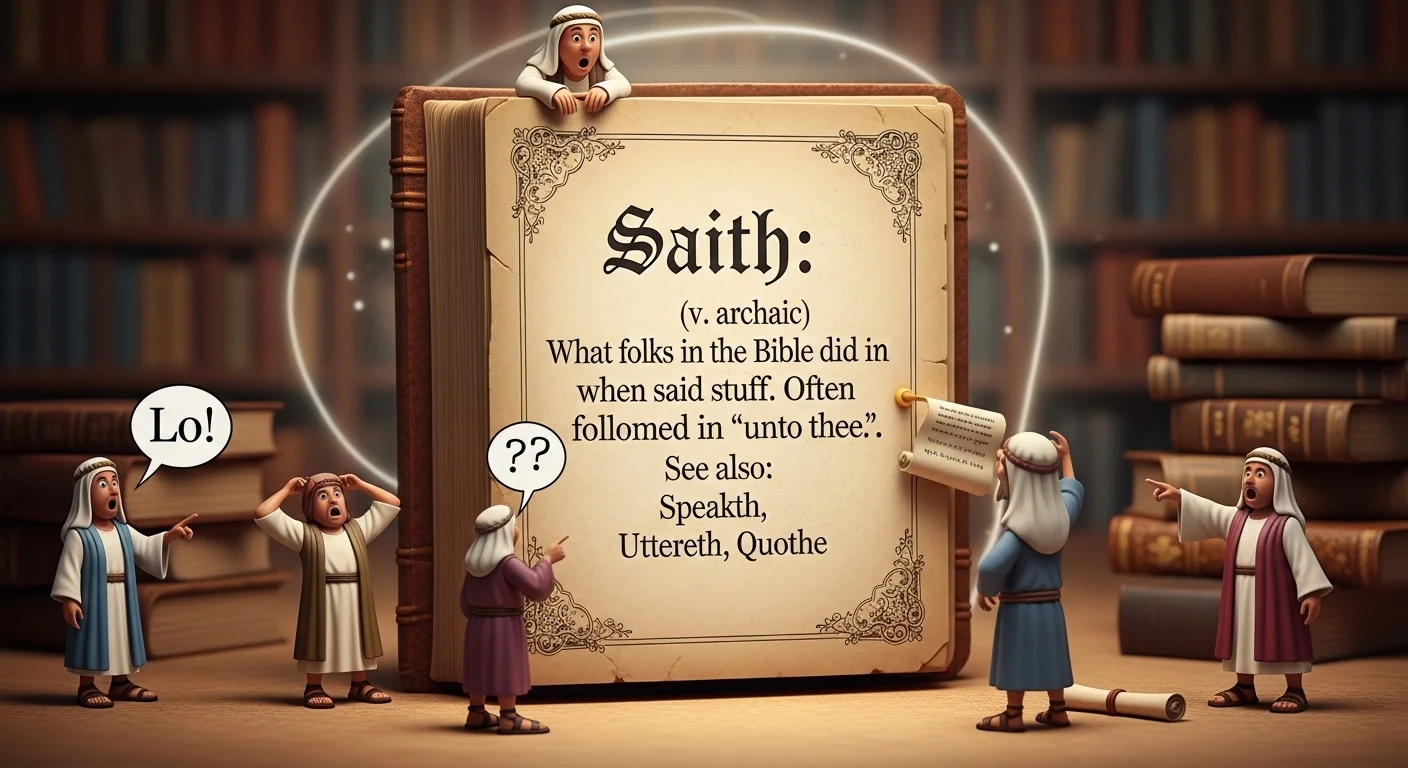
Many readers search for saith meaning in Bible because the word appears frequently in older translations like the King James Version (KJV). “Saith” simply means “says” or “said”, but in Scripture it is often used in a formal way to introduce statements spoken by God, prophets, or important biblical figures.
Understanding saith meaning in Bible helps believers appreciate the authority and seriousness of God’s spoken Word. It reminds Christians that when God “saith,” it carries divine power, truth, and unchanging authority.
God Saith With Authority – Genesis 1:3 (NIV)
“And God said, ‘Let there be light.’”
“Saith” reflects God speaking creation into existence.
This verse shows the power of God’s spoken Word.
The Lord Saith to His People – Isaiah 43:1 (NIV)
“Do not fear, for I have redeemed you.”
God’s words bring comfort.
This verse encourages trust in God’s promises.
Prophets Declare: Thus Saith the Lord – Jeremiah 1:7 (NIV)
“You must go to everyone I send you to.”
Prophets speak God’s message.
This verse encourages obedience to God’s calling.
God’s Word Is Living – Hebrews 4:12 (NIV)
“For the word of God is alive and active.”
God’s “saith” is powerful and active.
This verse encourages respect for Scripture.
Jesus Saith Truth – John 14:6 (NIV)
“I am the way and the truth and the life.”
Jesus speaks divine truth.
This verse encourages faith in Christ’s words.
God’s Word Never Fails – Isaiah 55:11 (NIV)
“So is my word that goes out from my mouth.”
What God saith always accomplishes His purpose.
This verse encourages confidence in His promises.
Hear What the Lord Saith – Micah 6:8 (NIV)
“What does the Lord require of you?”
God’s voice guides righteous living.
This verse encourages obedience and humility.
Jesus Speaks With Authority – Matthew 7:29 (NIV)
“He taught as one who had authority.”
Jesus’ words carry divine authority.
This verse encourages trust in His teachings.
God’s Voice Brings Life – Ezekiel 37:4–5 (NIV)
“Dry bones, hear the word of the Lord!”
God’s word restores life.
This verse encourages hope in His power.
Eternal Truth of God’s Word – Psalm 119:89 (NIV)
“Your word, Lord, is eternal.”
What God saith never changes.
This verse encourages stability in faith.
Theological Insights
Exodus 3:14 – God reveals Himself through spoken identity, showing the importance of His Word.
Numbers 23:19 – God does not lie, so what He “saith” is always true.
John 1:1 – The Word was with God, showing divine authority in speech.
Frequently Asked Questions
What does saith meaning in Bible represent?
Saith meaning in Bible simply means “says” or “said,” often used in older translations to introduce divine or prophetic speech.
Why is “saith” used in the Bible?
It is used in older English translations to give a formal and reverent tone to God’s or prophets’ words.
Is “saith the Lord” important in the Bible?
Yes, it emphasizes that the message comes directly from God with authority.
Where is “saith” mostly found?
It is mainly found in the King James Version (KJV) of the Bible.
Does saith meaning in Bible change the message?
No, it only changes wording style, not meaning.
What does “thus saith the Lord” mean spiritually?
It means the message is directly from God and must be taken seriously.
Conclusion
Saith meaning in Bible reflects the formal expression of God’s spoken Word, reminding believers of its authority, truth, and power. When God “saith,” it is not just speech—it is divine truth that brings direction, life, and eternal meaning.