
Bible Verses That Give a Biblical Perspective (NIV)
Isaiah 42:8 (NIV)
“I am the LORD; that is my name! I will not yield my glory to another or my praise to idols.”
God alone is worthy of honor and glory.
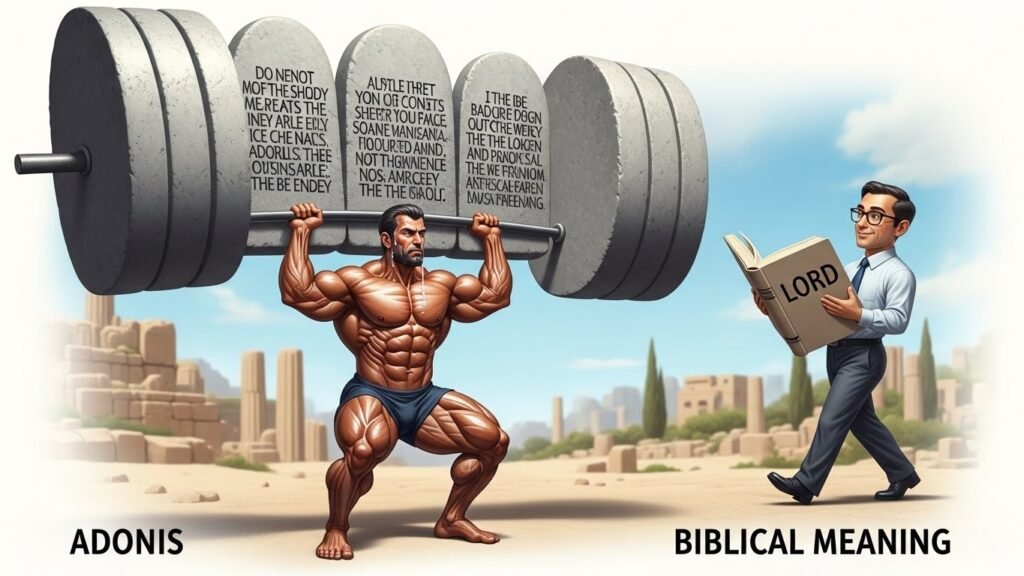
This verse shows why names tied to false gods are not used in Scripture.
Exodus 20:3 (NIV)
“You shall have no other gods before me.”
The Bible clearly rejects pagan worship.
This verse reinforces why Adonis has no biblical role.
Psalm 96:5 (NIV)
“For all the gods of the nations are idols, but the LORD made the heavens.”
God is distinct from all mythological figures.
It encourages believers to worship the true Creator alone.
Deuteronomy 12:30–31 (NIV)
“Do not inquire about their gods, saying, ‘How do these nations serve their gods?’”
God warns against adopting pagan practices.
This verse explains why biblical names are rooted in faith, not mythology.
Acts 17:24–25 (NIV)
“The God who made the world… does not live in temples built by human hands.”
Paul contrasts the true God with false gods.
It reminds believers that God is living and sovereign.
1 Corinthians 8:5–6 (NIV)
“For even if there are so-called gods… yet for us there is but one God, the Father…”
Christians worship one true God.
This verse establishes biblical monotheism clearly.
Colossians 2:8 (NIV)
“See to it that no one takes you captive through hollow and deceptive philosophy…”
Believers are warned against non-biblical influences.
It encourages discernment in culture and naming traditions.
Psalm 115:4–8 (NIV)
“But their idols are silver and gold, made by human hands.”
False gods are powerless.
This verse contrasts idols with the living God of the Bible.
Romans 12:2 (NIV)
“Do not conform to the pattern of this world…”
Christians are called to spiritual transformation.
It reminds believers to choose faith-centered identity.
Joshua 24:15 (NIV)
“But as for me and my household, we will serve the LORD.”
This verse emphasizes commitment to God alone.
It reflects the biblical approach to names, worship, and identity.
Theological Insights 📖
Names, Worship, and Biblical Authority
Exodus 20:3 + Isaiah 42:8: God does not share His glory with idols.
Psalm 96:5 + 1 Corinthians 8:6: Only one true God exists.
Colossians 2:8 + Romans 12:2: Believers must remain biblically discerning.