

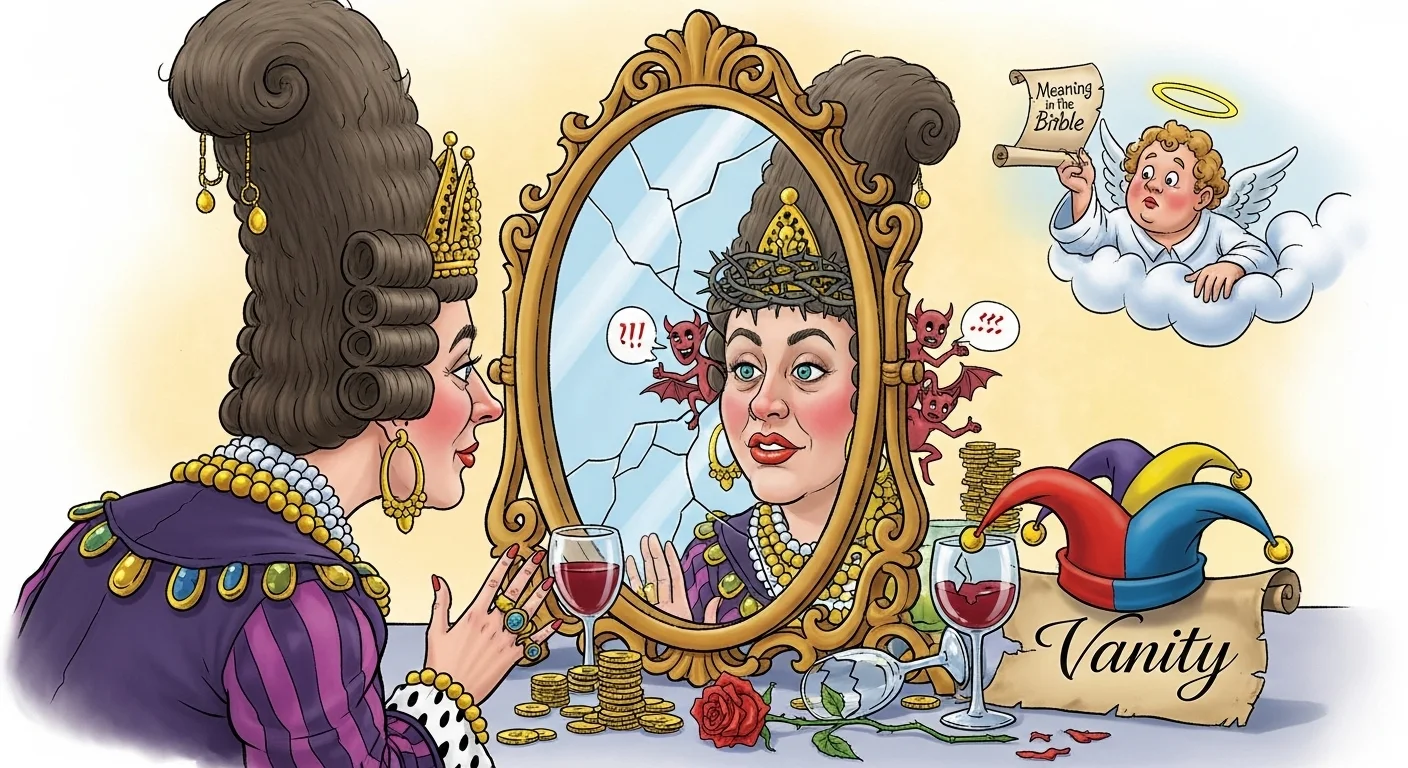
Everything Is Meaningless Without God – Ecclesiastes 1:2 (NIV)
“Meaningless! Meaningless! … Everything is meaningless.”
Vanity reflects emptiness.
This verse highlights life without God.
Chasing After the Wind – Ecclesiastes 1:14 (NIV)
“All of them are meaningless, a chasing after the wind.”
Worldly pursuits cannot satisfy.
This verse encourages seeking God.
Wealth Is Temporary – Ecclesiastes 5:10 (NIV)
“Whoever loves money never has enough.”
Vanity includes endless desire.
This verse warns against materialism.
Pride Leads to Downfall – Proverbs 16:18 (NIV)
“Pride goes before destruction.”
Vanity can mean pride.
This verse warns against arrogance.
Do Not Love the World – 1 John 2:16 (NIV)
“The lust of the flesh… comes not from the Father.”
Worldly desires are empty.
This verse encourages spiritual focus.
Life Is a Vapor – James 4:14 (NIV)
“You are a mist that appears for a little while.”
Vanity reflects life’s brevity.
This verse encourages eternal perspective.
Store Treasures in Heaven – Matthew 6:19–20 (NIV)
“Do not store up for yourselves treasures on earth.”
Earthly things fade.
This verse encourages eternal priorities.
True Purpose in God – Ecclesiastes 12:13 (NIV)
“Fear God and keep his commandments.”
Meaning comes from God.
This verse gives life’s true purpose.
Seek First God’s Kingdom – Matthew 6:33 (NIV)
“Seek first his kingdom and his righteousness.”
God brings fulfillment.
This verse encourages right priorities.
Contentment in God – 1 Timothy 6:6 (NIV)
“Godliness with contentment is great gain.”
True gain is spiritual.
This verse encourages satisfaction in God.
Theological Insights
Psalm 39:5 – Human life is fleeting, reinforcing the idea of vanity.
Romans 8:20 – Creation was subjected to frustration (vanity), showing the effects of sin.
Ecclesiastes 3:11 – God sets eternity in human hearts, contrasting with temporary vanity.