

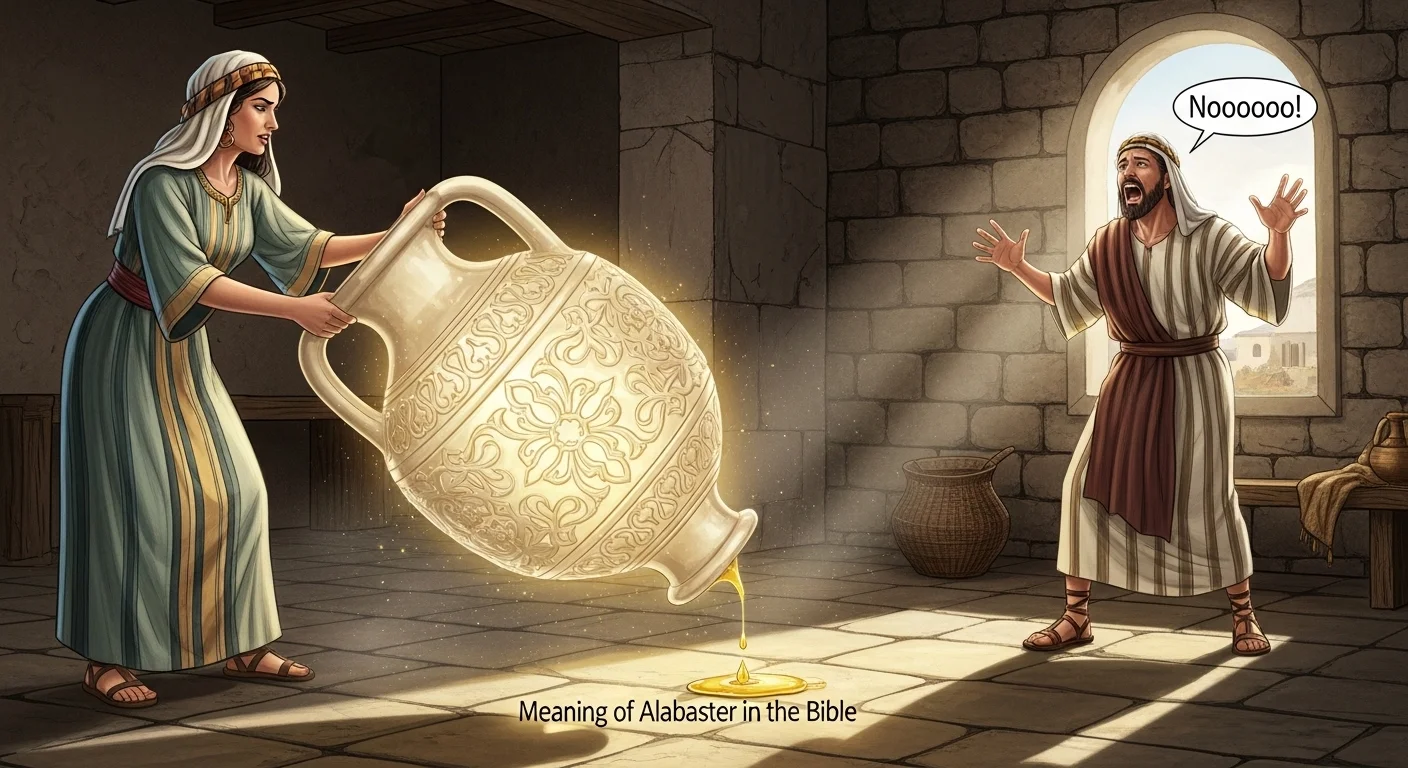
Matthew 26:7 – The Alabaster Jar Poured on Jesus (NIV)
“A woman came to him with an alabaster jar of very expensive perfume, which she poured on his head as he was reclining at the table.”
This verse shows an act of deep worship and personal sacrifice offered directly to Jesus.
It encourages believers to reflect on whether their love for alabaster meaning in Bible Christ is willing to give generously and without holding back.
Mark 14:3 – The Jar Was Broken (NIV)
“She broke the jar and poured the perfume on his head.”
Breaking the jar shows complete surrender and no intention of saving anything for later.
This challenges believers to consider whether they truly surrender their lives fully to Christ.
Luke 7:37–38 – A Heart of Repentance and Love (NIV)
“A woman… brought an alabaster jar of perfume… and began to wet his feet with her tears.”
The alabaster jar is linked with repentance, humility, and deep gratitude for forgiveness.
This verse encourages self-reflection about how forgiveness in Christ shapes personal worship.
John 12:3 – The House Was Filled with Fragrance (NIV)
“Mary took about a pint of pure nard… and anointed Jesus’ feet.”
True worship impacts the atmosphere around believers and points others toward Christ.
This verse encourages believers to live in a way that spreads Christ’s presence through love and obedience.
Psalm 23:5 – Anointed in God’s Presence (NIV)
“You anoint my head with oil; my cup overflows.”
Anointing represents God’s favor, care, and blessing.
This verse encourages believers to trust God as their provider and faithful shepherd.
Song of Songs 1:12 – Fragrance in the Presence of the King (NIV)
“While the king was at his table, my perfume spread its fragrance.”
Fragrance reflects love and devotion in the presence of the beloved.
This verse encourages believers to see worship as a joyful and intimate response to God.
Exodus 30:25 – Holy Anointing Oil (NIV)
“Make these into a sacred anointing oil.”
Anointing oil was set apart for God’s holy purposes.
This verse encourages believers to reflect on living lives set apart for God’s glory.
Psalm 133:2 – The Blessing of God’s Anointing (NIV)
“It is like precious oil poured on the head.”
God’s anointing reflects unity, blessing, and spiritual refreshment.
This verse encourages believers to value spiritual unity and God’s presence in the church.
2 Corinthians 2:15 – The Fragrance of Christ (NIV)
“For we are to God the pleasing aroma of Christ.”
Believers represent Christ through their lives.
This verse encourages believers to examine whether their daily actions reflect Christ to others.
Isaiah 61:3 – The Oil of Joy Instead of Mourning (NIV)
“To bestow on them a crown of beauty instead of ashes, the oil of joy instead of mourning.”
God replaces brokenness with restoration and joy.
This verse encourages believers to trust God’s healing work and renewed hope in difficult seasons.
Theological Insights
Philippians 2:8–9 – Christ’s humility and obedience explain why the woman’s costly worship was fitting for the Savior who would soon give His life.
Romans 12:1 – True worship involves offering our whole lives to God, strengthening the meaning behind the broken alabaster jar.
Hebrews 9:14 – Christ’s sacrifice purifies believers, connecting devotion and forgiveness to the deeper purpose of worship.